Apple was granted a patent in 2016 for an eco-friendly bag made of 60% recycled materials with a unique design to align with the company’s brand aesthetics. Apple came up with a bundle of alterations that helps its bags remain sturdy, pearly white and environmentally friendly.
IP Fun Fact
Nike’s “Just Do It” Slogan was Inspired by a Criminal
Nike’s iconic “Just Do It” slogan was inspired by convicted murderer Gary Gilmore’s last words before his execution: “Let’s do it.” It was softened to become one of the most famous advertising slogans in history.
IP Fun Fact
Post-It Notes Were a Failed Adhesive
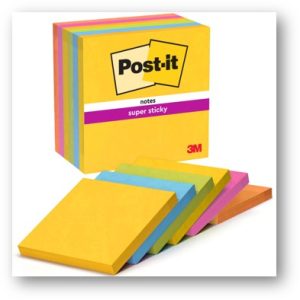
The glue used in Post-it Notes was accidentally invented by a 3M scientist who was trying to make a strong adhesive.
IP Fun Fact
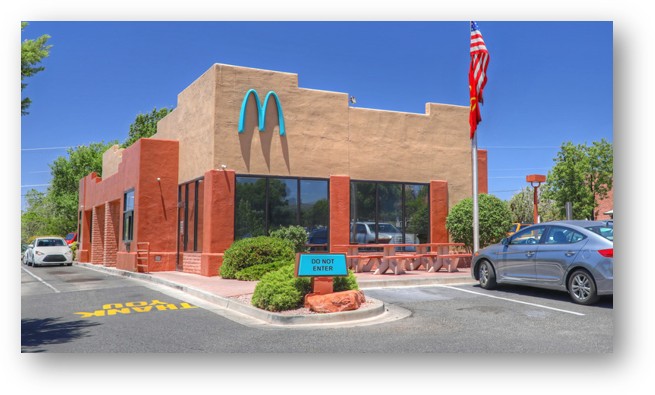
The McDonald’s restaurant in Sedona, Arizona uses blue arches instead of its iconic yellow golden logos.
The blue arches of the McDonald’s there (built early in the 1990s) were meant to harmonize with the earthy, serene aesthetic of Sedona, mandated by the city’s planning commission.
IP Fun Fact
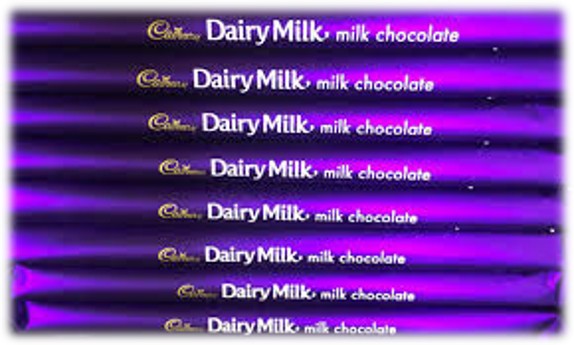
Cadbury’s use of the colour Pantone 2865c since 1914
Cadbury has used its iconic purple on its products since 1914, originally to honour Queen Victoria as it was her favourite colour. As the company had a royal warrant as an official cocoa and chocolate maker for the British monarch, the colour also established a connection with the Monarchs and helped distinguish its products from competitors.
IP Fun Fact
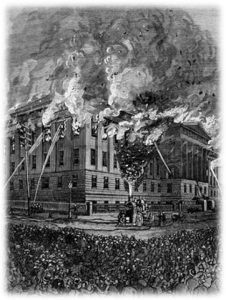
When Patents Went Up in Smoke
In 1836, a massive fire destroyed an estimated 10,000 patent drawings and 7,000 models in the US Patents Office. Many inventors later resubmitted their designs, a dramatic testament to the resilience of innovation in the face of disaster. But to make things worse, the Patent Office burned down again in 1877.
IP Fun Fact
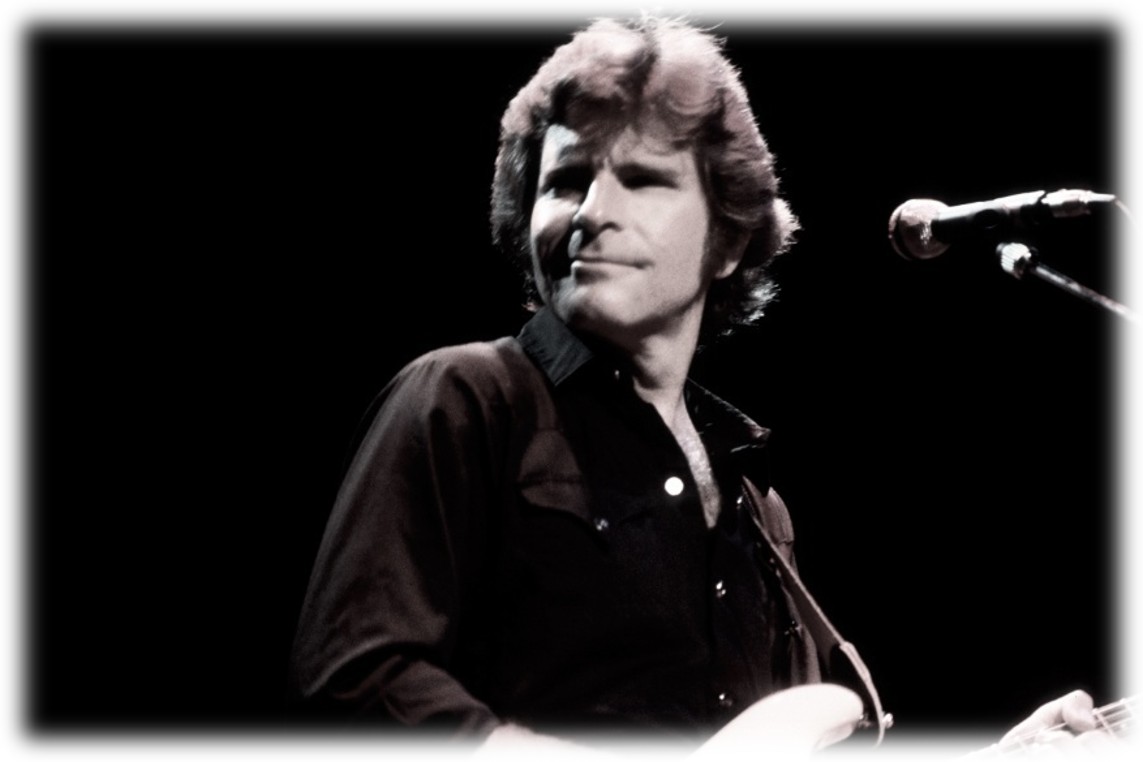
Can You Plagiarize Your Own Song?
In a bizarre music lawsuit, John Fogerty, voice of Creedence Clearwater Revival (CCR), was sued for sounding too much like himself. After Fogerty went solo, his former label, Fantasy Records, claimed his new hit “The Old Man Down the Road” was a copy of his older song, “Run Through the Jungle.” Fogerty famously brought his guitar to the courtroom to demonstrate his creative process. A six-person jury decided in Fogerty’s favor.
IP Fun Fact
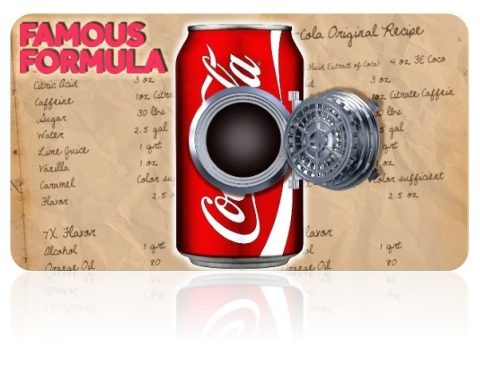
Coca-Cola Never Patented Its Formula
Coca-Cola famously never patented its secret recipe. The reason? Patents expire, but trade secrets don’t. By keeping the formula confidential, allegedly locked in a vault in Atlanta, the company chose perpetual secrecy over time-limited monopoly, turning IP law into corporate mythology.
IP Fun Fact
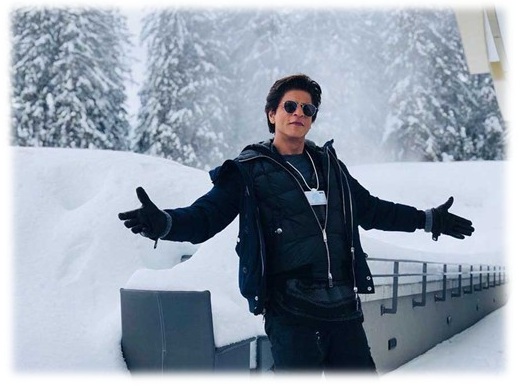
Shah Rukh Khan’s “King Khan” Is Legally His
Shah Rukh Khan has trademarked his iconic nickname “King Khan”, covering entertainment services, endorsements, and merchandise. The move highlights how celebrity identity itself can function as intellectual property, turning fame into enforceable brand protection.
IP Fun Fact
When A Rapper Sued a Doctor Over a Name
In 2018, Dr. Dre (Andre Young – An American Rapper) lost a trademark opposition against gynaecologist Dr. Draion M. Burch, who sought rights over the name “Dr. Drai.” The U.S. Patent and Trademark Office (USPTO) ruled that consumers would not confuse a music producer with a medical professional. It emphasized that patients exercise a higher degree of care when choosing healthcare services. The decision allowed “Dr. Drai” to be registered within the medical field, highlighting limits of trademark protection.
IP Fun Fact
The World’s First Patent Was Granted in 1474
The earliest recorded patent was granted in Venice in 1474 for a glass-making technique. This Venetian Patent Statute is considered the foundation of modern patent law, proving that intellectual property protection predates most modern legal systems
by centuries.
IP Fun Fact
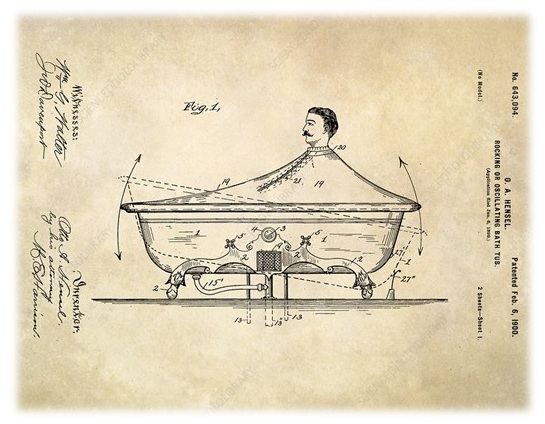
Rocking Bath Tub (1900)
In 1900, Otto A. Hensel patented the “Rocking or Oscillating Bath Tub,” an invention that gently rocks and splashes water against the bather during use. The idea was to create a more invigorating and therapeutic bathing experience without any manual effort. Long before modern spas and water parks, this patent proves that inventors were already trying to turn everyday routines into immersive experiences one rocking bath at a time!
IP Fun Fact
A Spring, a Spring, a Marvellous Thing!
Many famous inventions were born entirely by accident, including the popsicle, Teflon, and the Post-it note and the beloved Slinky is no exception. Naval engineer Richard James was working on a spring-based system to stabilise sensitive ship equipment in rough seas when one of his springs fell off a shelf and “walked” across the floor. Instantly recognising its potential, James, along with his wife Betty, refined the design and transformed it into a toy. In 1946, James filed a utility patent application at the United States Patent and Trademark Office for the Slinky, describing it as a “toy and process of use”.
IP Fun Fact
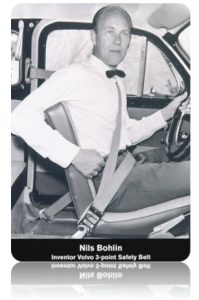
Seat belts patent for free
In 1959, Volvo engineer Nils Bohlin invented the modern three-point seat belt. Volvo filed the patent (US3043625A) in 1959 which was granted on July 10, 1962, but made a remarkable decision soon after. Instead of restricting its use, Volvo opened the patent to all manufacturers for free. Which allowed the safety innovation to spread rapidly across the global auto industry. The three-point seat belt became the standard in vehicles worldwide. It is estimated that this single invention has over a million lives saved.
IP Fun Fact
Where to make the Mark ?
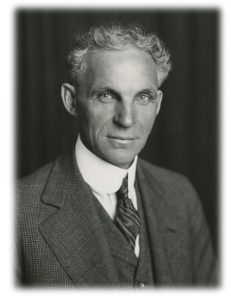
When Henry Ford’s plant generator failed and his engineers couldn’t fix it, he called Charles Proteus Steinmetz, a well-known electrical engineer. After two days of observation and calculations, Steinmetz marked a small X on the machine and directed engineers to adjust a specific coil, instantly solving the problem. He billed $10,000 (a significant sum at the time), later explaining it as $1 for the mark and $9,999 for knowing where to place it, which Ford accepted as the true value of expertise. As Bill Honaker (a former USPTO Examiner) notes, IPR works the same way: a single sentence can determine a patent’s strength, and a small detail can decide a trademark dispute. These small details and solutions might appear straightforward, but they only appear simple and straightforward after decades of experience of IPR lawyers reveal how to carefully draft and identify rights.
IP Fun Fact
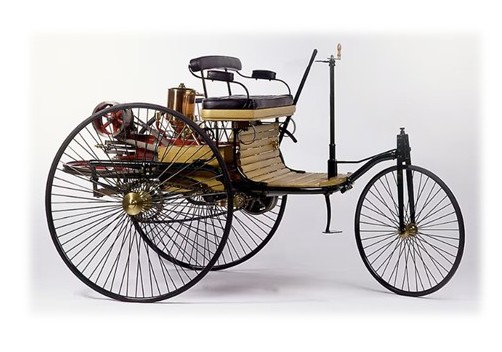
The first petrol-powered automobile
The first petrol-powered automobile was invented in 1886 by Carl Benz. With crucial financial and practical support from his wife, Bertha Benz, he developed the three-wheeled vehicle known as the Benz Patent Motorwagen. This early automobile was powered by a single-cylinder, four-stroke engine producing about 0.9 horsepower. Despite its modest output, the Motorwagen marked a revolutionary step in transportation, laying the foundation for the modern automotive industry.
IP Fun Fact
X-Rays for Humanity
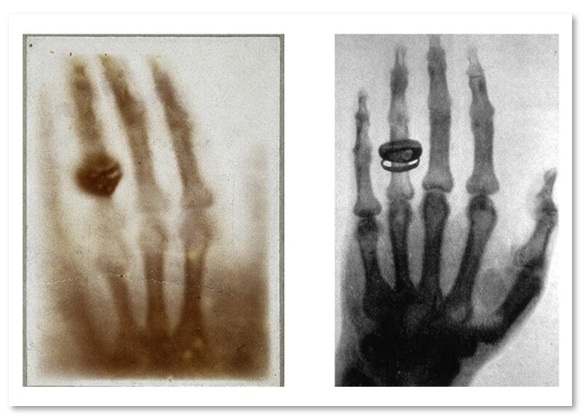
In 1895, Wilhelm Conrad Röntgen discovered X-rays but made the remarkable decision not to patent his invention, believing that scientific breakthroughs should benefit all of humanity. By keeping the technology free for medical and research use, he enabled its rapid global adoption, transforming healthcare forever. In recognition of this groundbreaking contribution, he was awarded the first-ever Nobel Prize in Physics in 1901. One of his earliest photographic plates from his experiments was a film of his wife Bertha’s hand, with her wedding ring clearly visible. (Photograph).
IP Fun Fact
Insulin Patent for $1
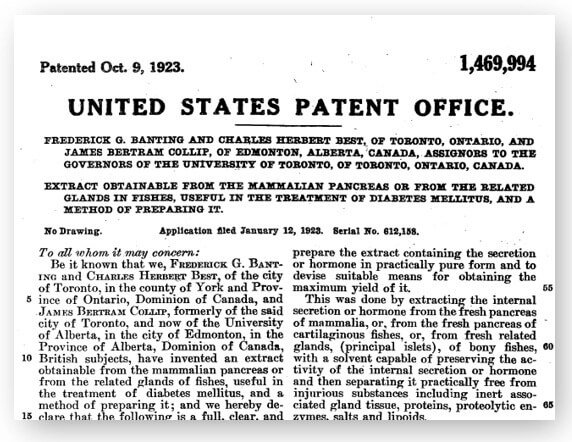
In 1923, Frederick Banting, Charles Best, and James Collip secured U.S. patents for insulin and its production process, but instead of profiting, they sold the rights to the University of Toronto for just $1 each. Banting is widely quoted as saying, Insulin does not belong to me, it belongs to the world, reflecting his belief that lifesaving medicine should be accessible to all. This extraordinary decision allowed insulin to be mass-produced quickly, transforming diabetes from a fatal illness into a manageable condition. His work earned him the Nobel Prize in Physiology or Medicine the same year, making him one of the youngest Nobel laureates ever.
IP Fun Fact
The Patent That Tried to Stop You From Eating
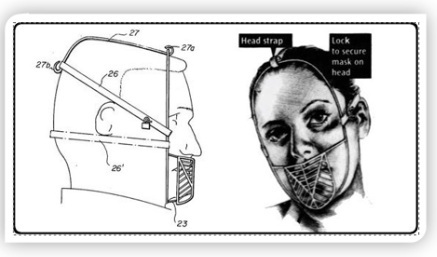
US4344424A is a United States patent issued in 1982 for an “anti-eating face mask.” The invention was designed to physically prevent a wearer from eating food, primarily as a behavioural aid for controlling obesity. The mask consists of a lightweight frame designed to cover the wearer’s mouth, preventing food intake while still allowing breathing and speaking. Although the device never became commercially widespread, it’s design reflects the medical and psychological attitudes of the time toward weight management and self-control.
IP Fun Fact
The Shortest Patent Claims Ever
Glenn T. Seaborg, a Nobel Prize–winning scientist, held two of the shortest patent claims in history. In patents US3156523A and US3161462A, the independent claims were simply “Element 95” and “Element 96”, referring to the elements Americium and Curium (artificial elements created in cyclotrons). Instead of lengthy technical descriptions, these patents claimed the elements themselves, making them uniquely minimal.