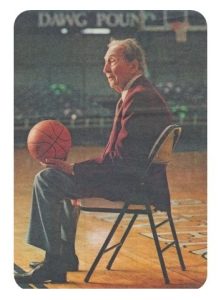
Basketballs were dark brown in color until 1950s when Butler University men’s head basketball coach – Tony Hinkle reworked the ball, changing its colour to orange which players could easily see. He also added some stitching lines for better grip.
IP Fun Fact
Dimpled Golf Ball Innovation
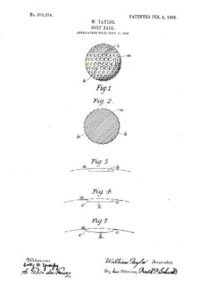
William Taylor, an English engineer, pioneered the modern dimpled golf ball in 1908 (applied for in 1905), which detailed the aerodynamic advantages of regularly spaced, pitted indentations on a spherical surface.
IP Fun Fact
The Patent for the Sport of Tennis
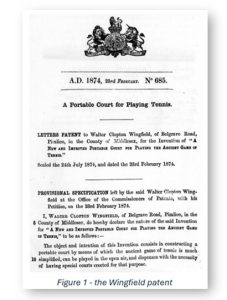
While most sports equipment is patented, it is rare for an entire sport to be protected. In 1874, Major Walter Clopton Wingfield was granted British Patent No. 685 for “a new and improved portable court for playing the ancient game of tennis.” He called his version “Sphairistiké” (Greek for “ball-playing”). The patent included the design of the hourglass-shaped court, the net, and even the rules of the game. Wingfield sold the game in “box sets” containing all the necessary equipment. When the patent expired in 1877, the All England Croquet Club held the first Wimbledon Championship, standardizing the rectangular court we use today.
IP Fun Fact
The Cricket Pitch That Banned Bouncers
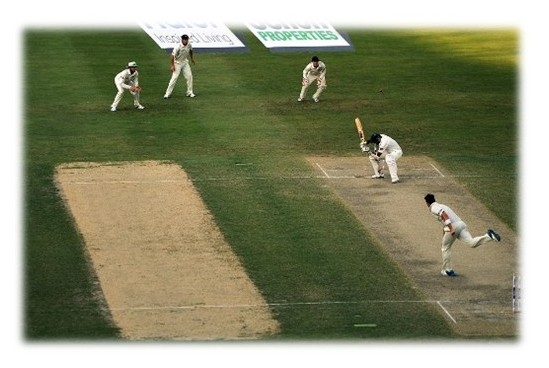
In 2003, a particularly protective invention was granted in India under Patent No. 1009/DEL/2003 for a “Cricket Pitch”. The primary goal of this invention was to physically prevent bowlers from delivering bouncers. The background of the patent describes bouncers as dangerous deliveries that can cause physical injury. By engineering the pitch surface with specific materials, the inventor sought to ensure that balls would not “kick up” toward a batsman’s head, effectively trying to solve a safety issue through ground engineering rather than just umpire intervention.
IP Fun Fact
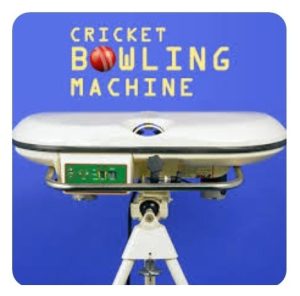
The Automatic Cricket Bowling Machine
Practicing against a consistent bowler was revolutionized by Indian Patent No. 1560/DEL/2003, granted for “An improved cricket ball throwing machine”. Unlike early manual versions, this granted patent covered a device capable of throwing a ball at a predetermined speed, spin, and direction with extreme accuracy. This allowed professional batsmen to practice specific weaknesses, such as a “moving” out-swinger or a 150 km/h yorker, for hours without needing a human bowler.
IP Fun Fact
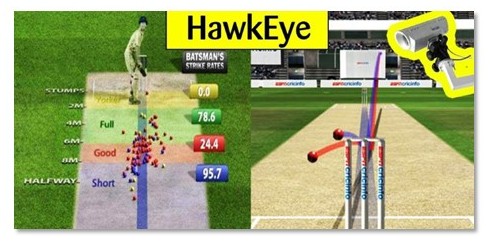
The Hawk-Eye Trajectory Tracker
The technology that dictates “Out” or “Not Out” in modern cricket is protected by a series of high-level patents, including WIPO Patent No. PCT/GB2000/004507. Developed by Dr. Paul Hawkins, this granted IP allows multiple high-speed cameras to track a ball’s flight and predict its future path with a high degree of accuracy. While it was first used for television broadcasting in 2001, it is now the legal “gold standard” for the Decision Review System (DRS), proving that a mathematical algorithm can hold the final word in international sports.
IP Fun Fact
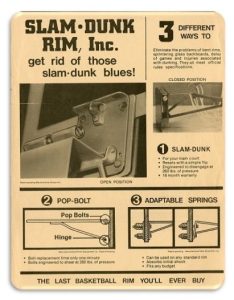
The Invention of the Breakaway Rim
Dunking in basketball used to be a dangerous affair, not for the players, but for the glass backboards which would frequently shatter under the force. In 1982, Arthur Ehrat was granted U.S. Patent No. 4,365,802 for a “pressure release net support assembly,” known today as the breakaway rim. The design used a spring-and-hinge mechanism that allowed the rim to flex downward when a player slammed the ball, absorbing the energy that previously would have shattered the backboard. This single patent allowed the “Slam Dunk” to become the centrepiece of modern basketball entertainment.
IP Fun Fact
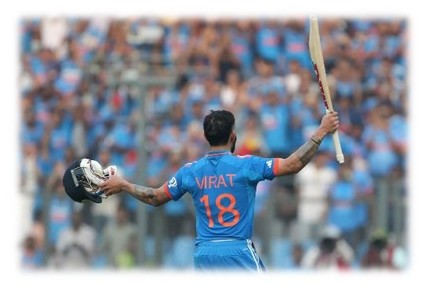
Virat Kohli’s “one8” Brand
In India, the trend of athletes treating their names as high-value IP has reached new heights with Virat Kohli. He has successfully registered the trademark “one8” (a combination of his jersey number 18 and the word “one”) across multiple categories including class 25 and 28 in India. This granted trademark covers everything from sportswear and footwear to fragrances. By securing this IP, Kohli ensures that his personal “persona” is protected as a distinct commercial brand, preventing unauthorized parties from profiting off his fame in the retail market.
IP Fun Fact
The Cricket Helmet with Neck Protection
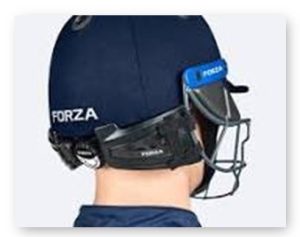
Following high-profile injuries, the design of the cricket helmet underwent a legal and physical transformation. UK Patent No GB2535639 (and subsequent grants) covers improved “Neck guards” or “StemGuards” that attach to the back of a standard helmet. This IP protects a honeycomb-style attachment that absorbs high-velocity impacts to the vulnerable area of the neck, showing how a single granted design can fundamentally change safety standards across a global sport.
IP Fun Fact
No-Slip Wrestling Shoe
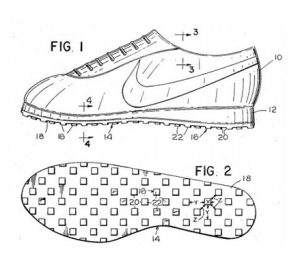
Wrestling requires extreme traction on a rubberized mat. In 1974, U.S. Patent No. 3,822,490 was granted for an “Athletic shoe particularly for wrestling.” The patent covered a unique sole design that extended up the sides of the foot, providing grip even when the foot is at extreme angles. This granted IP set the standard for the specialized footwear used in amateur and Olympic wrestling for the next 50 years.
IP Fun Fact
Owning the Game
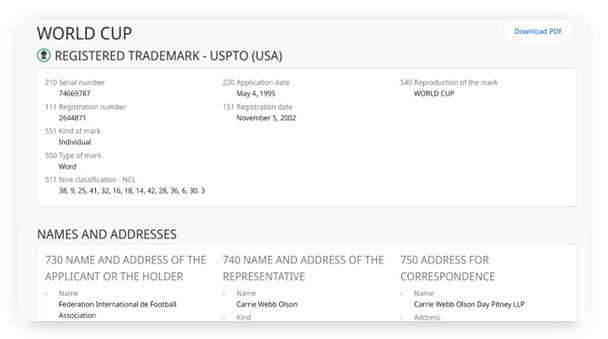
The term “World Cup” which sounds like a generic description of a global sporting event is protected as a trademark by FIFA across multiple jurisdictions, including registrations and filings before the United States Patent and Trademark Office. For instance, FIFA has secured protection for variations like “WORLD CUP” and “FIFA WORLD CUP” for entertainment and related services, with certain registrations achieving live/renewed status over time.
IP Fun Fact
Brains and Bots
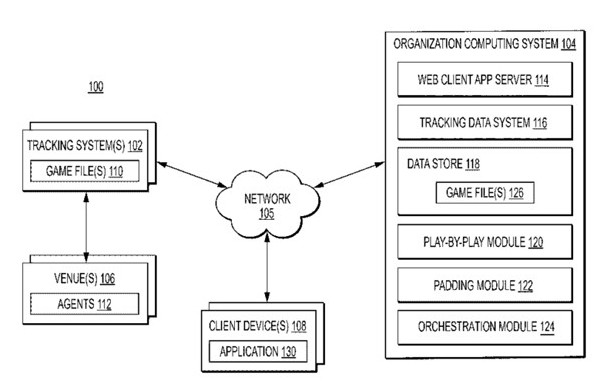
In 2025, Stats LLC was granted U.S. Patent Application No. 2025/0315661 for a multimodal large language model designed to process live match data. The system was described as ingesting video, audio, player metrics, and contextual inputs, while cross-referencing extensive historical databases. It was further stated to generate real-time outputs such as highlight reels, match summaries, and predictive insights.
IP Fun Fact
Swing Hard, Patent Harder
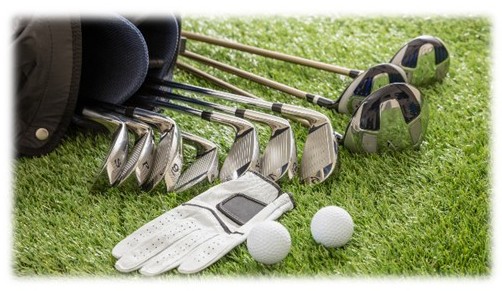
Golf has long been one of the most heavily patented sports, with hundreds of patents granted annually and thousands covering everything from club heads to dimple patterns on balls. In fact, just a handful of major players, such as Fila Korea Limited, Karsten, Callaway, TaylorMade and Bridgestone have historically accounted for over 90% of golf-related patent filings in the U.S. Patent battles in golf have involved hundreds of millions of dollars, with courts even briefly banning flagship products during disputes.